FOOD IMPACT PLATFORM

Less loss. Better decisions. Measurable results.

Food Impact shows what causes the loss, what operational change reduces it, then measures the result.

Who are we? The Food Impact Platform is developed by the Clean Label team: we combine food-industry, measurement, and business-analytics expertise to turn food loss into a remeasured, better business decision. Read more about us →
5measurement areas in one platform
Saved · Waste · Diet · Feedback · Result — how it works: Measure → Recommend → Change → Remeasure.
SavedWasteDietFeedbackResult

What exactly is this?

Food Impact is a data-driven measurement and decision-support system that helps hospitality, corporate, retail, and food-manufacturing environments uncover loss, identify intervention opportunities, and then measure the business result.

  • How much less food waste was generated compared to a similar event.
  • How much rescued or upcycled ingredient was used.
  • How inclusive the offering was, dietarily.
  • How participants rated the offering and the overall experience.

Who is it for?

For hotels and HoReCa operators, corporate catering and event partners, retail chains, and food manufacturers who want to reduce loss and measure the business result of their interventions based on real data.

Retail example

Retail: where does the loss occur, and which intervention works?

Example: reducing waste, expiry loss, markdowns, or improving ordering accuracy in a specific retail chain.

  • where loss recurs (which store or category)
  • when it's worth marking down earlier
  • what's worth ordering less of
  • where inventory turnover is a problem
  • which intervention actually led to improvement

Result: a loss map and a quantifiable business impact.

Food Impact doesn't just show where waste or margin loss occurs — it also helps identify which intervention can lead to measurable improvement.

Hospitality & events example

Less over-ordering, a better guest experience

Example: reducing over-ordering, optimizing portion sizes, and timing buffet restocking at an event or hospitality service.

  • reducing over-ordering
  • optimizing portion size
  • timing buffet restocking
  • saving leftovers / identifying upcyclable ingredients
  • more precise quantity planning for the next event

Payoff: less waste, more precise planning, a better guest experience and — where relevant — new value from upcyclable ingredients.

We don't just measure how much is left over after an event or service — we also show how to operate with less loss and more precise planning next time.

Manufacturing example

Less loss. Better yield.

Example: reducing raw-material loss or scrap, or improving yield, in a manufacturing process.

  • where loss occurs recurrently
  • at which process step yield deteriorates
  • what change can reduce scrap
  • which upcyclable ingredient can be used in a new way
  • what actual result the intervention delivered

Result: measurable yield improvement, less loss and a better economic outcome.

Diet and inclusivity

Where relevant, Food Impact also connects dietary needs and consumer feedback with the loss data, so the next offering can be planned more precisely and more inclusively.

Financial impact

Where the data allows, Food Impact attaches an estimated financial impact to the suggested changes, then compares the actual result against the baseline in the next measurement period. In a manufacturing setting, this can also mean the economic impact of changes in scrap, raw-material use, and yield.

How does it work?

Food Impact doesn't just show what happened — it recommends the next operational change, then measures its result.

01

Measurement — The starting point and real operational data.

02

Recommendation — Concrete, prioritized actions based on the measurement.

03

Change — Rolling out the selected operational change.

04

Remeasurement — Comparing the actual result against the starting point.

Where there's further potential: new value

If reusable raw material arises in operations or manufacturing, Food Impact helps identify a new use for it.

Data alone isn't enough. The next decision is what counts.

Food Impact doesn't just show what happened — it recommends a concrete change, then measures its result.

order lessrestock the buffet lateradjust the portion sizemark down earliermatch quantity more closely to demandmake the offering more inclusivereduce manufacturing scrapimprove the yieldreuse valuable raw material
Commercial model

From measurement to a long-term partnership

The purpose of the 30-day free measurement is to prove whether the measured and remeasured business benefit justifies a long-term partnership.

30-day free measurement → Recommendation → Change → Remeasurement → Paid continuation → Annual / multi-site partnership

30-day free measurement

With real operational data and a predefined business goal.

Proven result

We only measure and promise what the client's own data can prove.

Annual license

A proven result can lead to an annual, multi-site, or multi-process partnership.

Business benefits

Less loss. More conscious operations. Remeasured results.

Food Impact turns operational data into a concrete change recommendation, then shows you whether it worked.

Less loss

Concrete operational changes based on real data.

Usable data

For executive, ESG, HR, and sustainability reporting.

Remeasured result

We don't just recommend — we show you whether the change worked.

New value from the same raw material

Where relevant, a reusable raw material arising in operations or manufacturing can be turned into a new use or a new product through partner development.

Circular value creation

Loss can become not just savings, but new value.

Food Impact identifies reusable raw materials arising in operations or manufacturing, helps find the right development and implementation partner, then measures the business and environmental result.

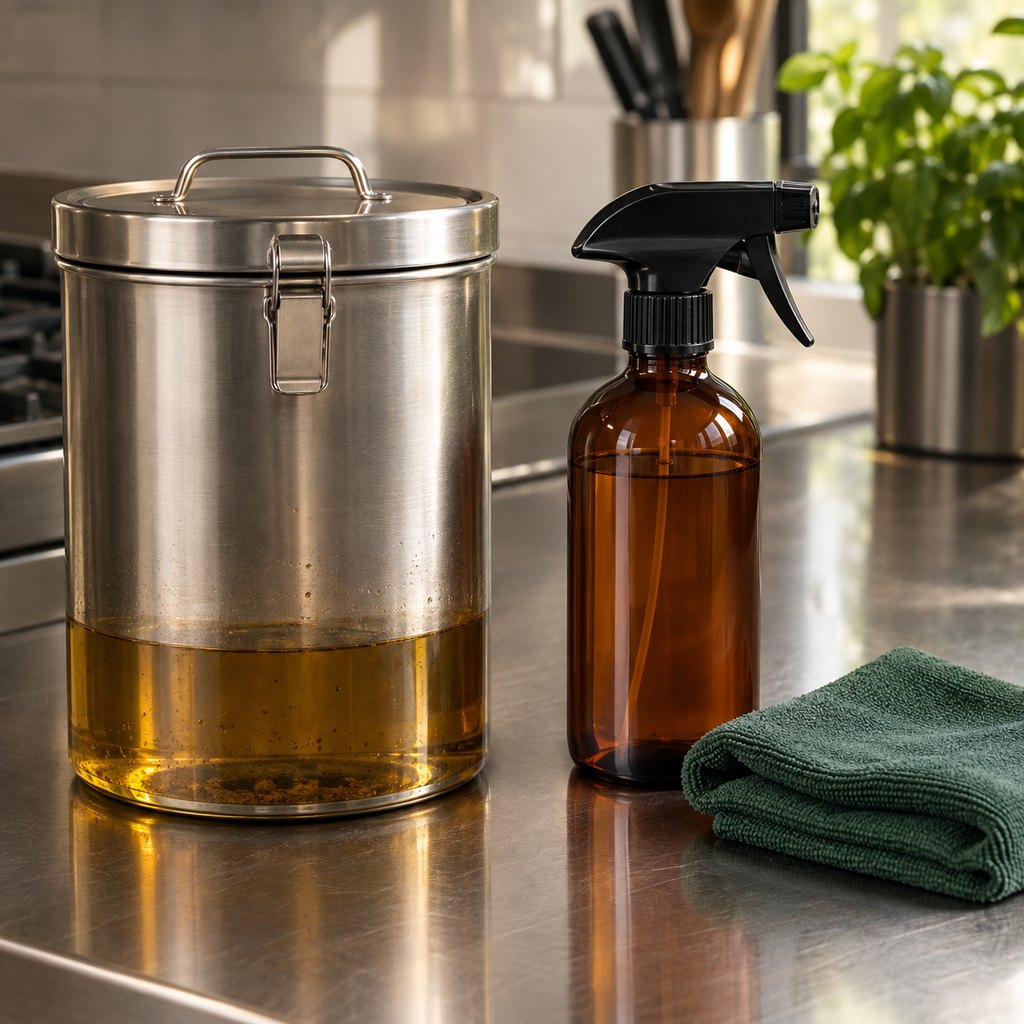
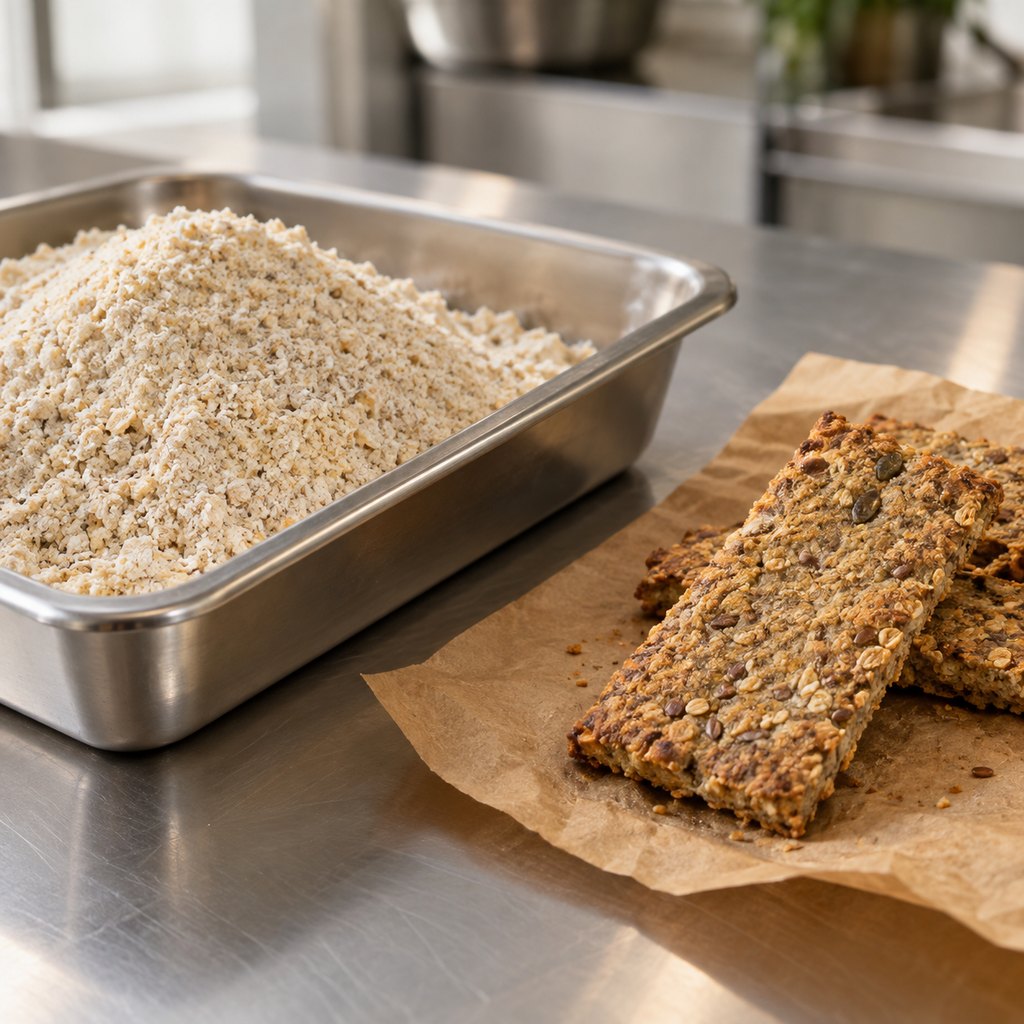
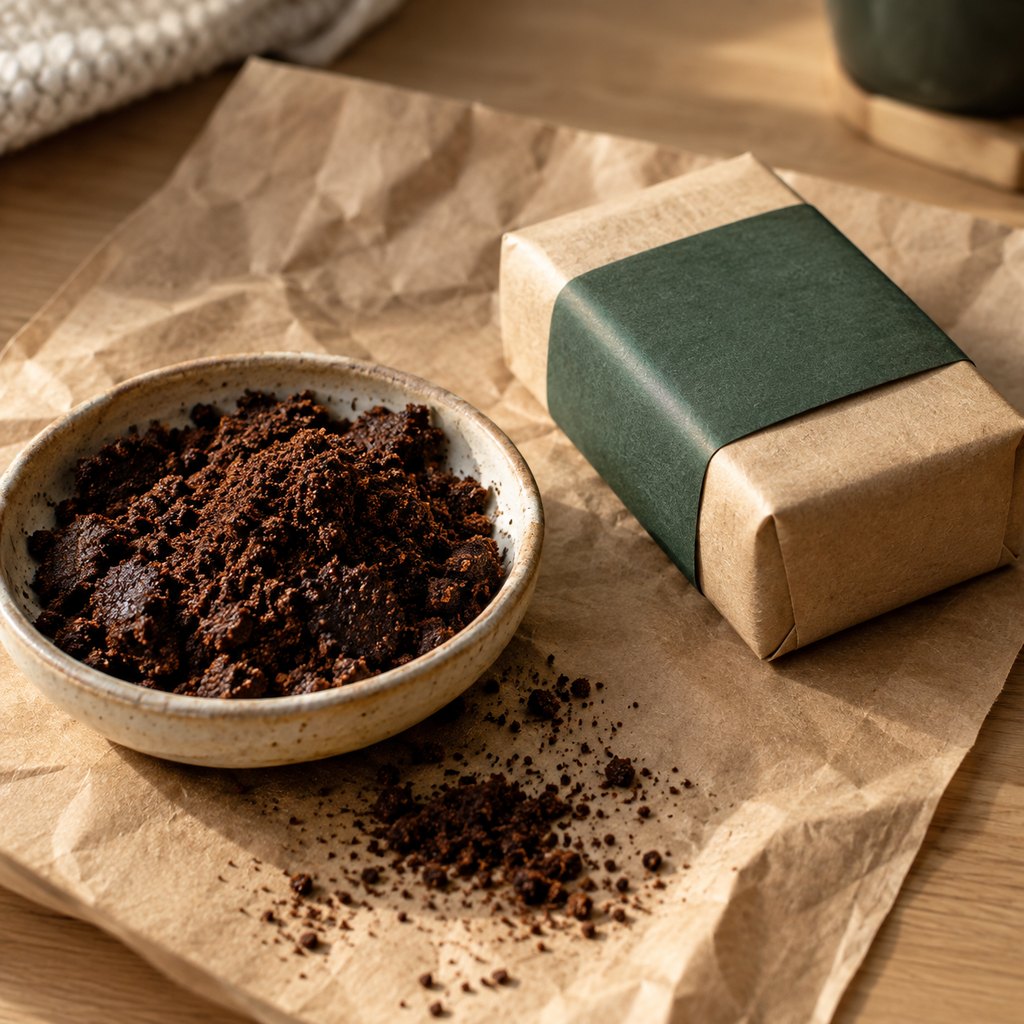
Illustration — example of circular use.
Coffee grounds → new premium product
Frying oil → professional cleaning agent / degreaser
Manufacturing raw-material residue → new use or product

Measurement → identifying the opportunity → partner implementation → new value → remeasurement

Try it live, no login needed

Two demo modes. One click — no signup, no password to type. The demo data is visible to everyone, so please don't enter real data.

See the products, feedback and finished Food Impact report of a closed event.

Login details, if you want to sign in on another device:

See a sample hotel's daily F&B data, monthly summary and waste analysis.

Login details, if you want to sign in on another device:

Live, on-site

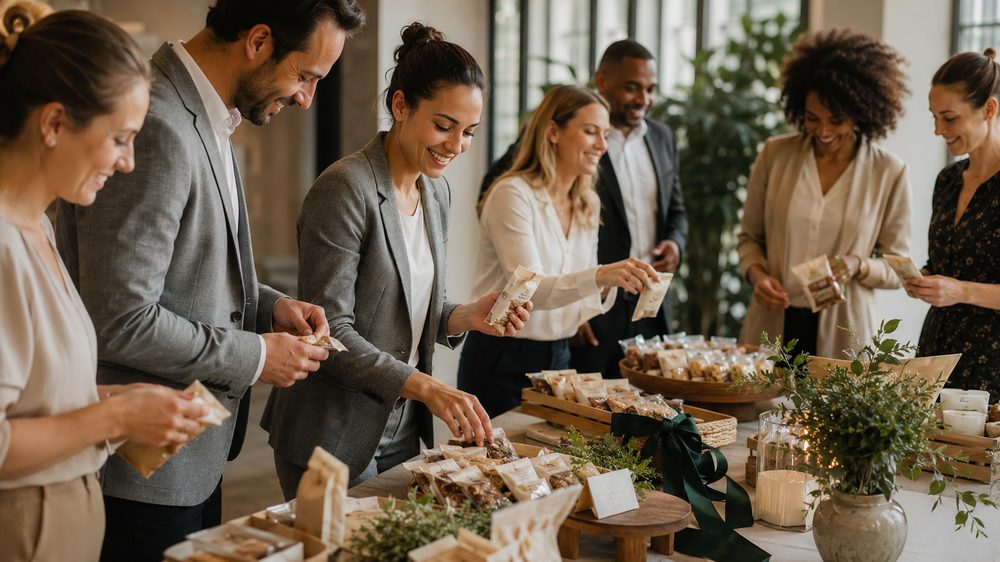
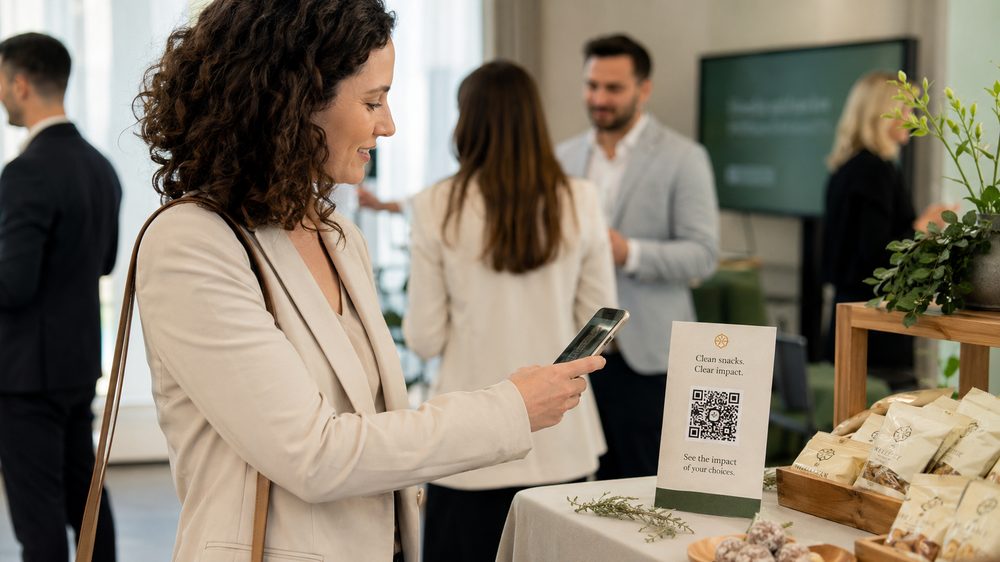
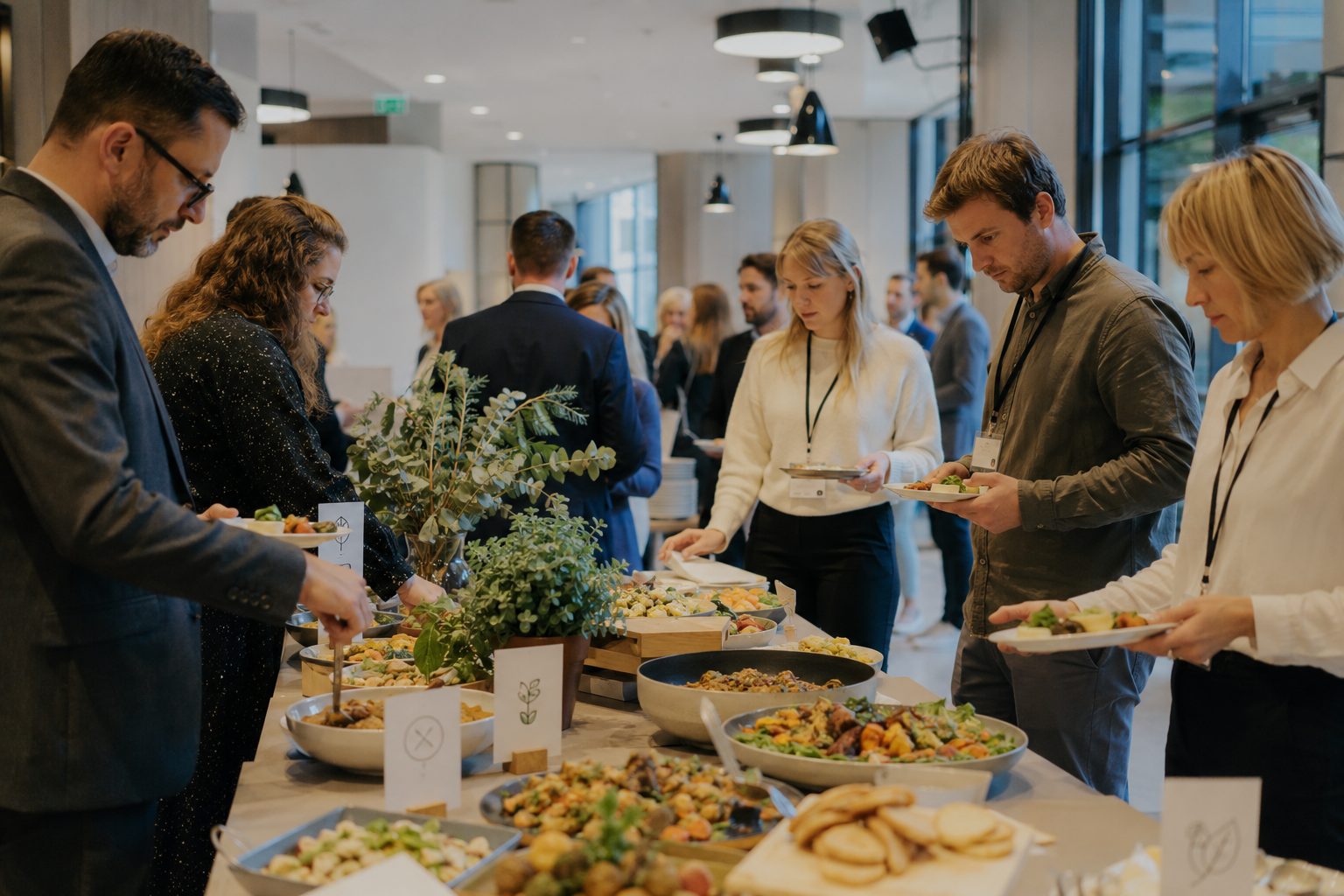
What a Food Impact-measured event actually looks like.

A mindful snack spread at a corporate event
A participant scanning the QR survey
Our premium hospitality partner's team
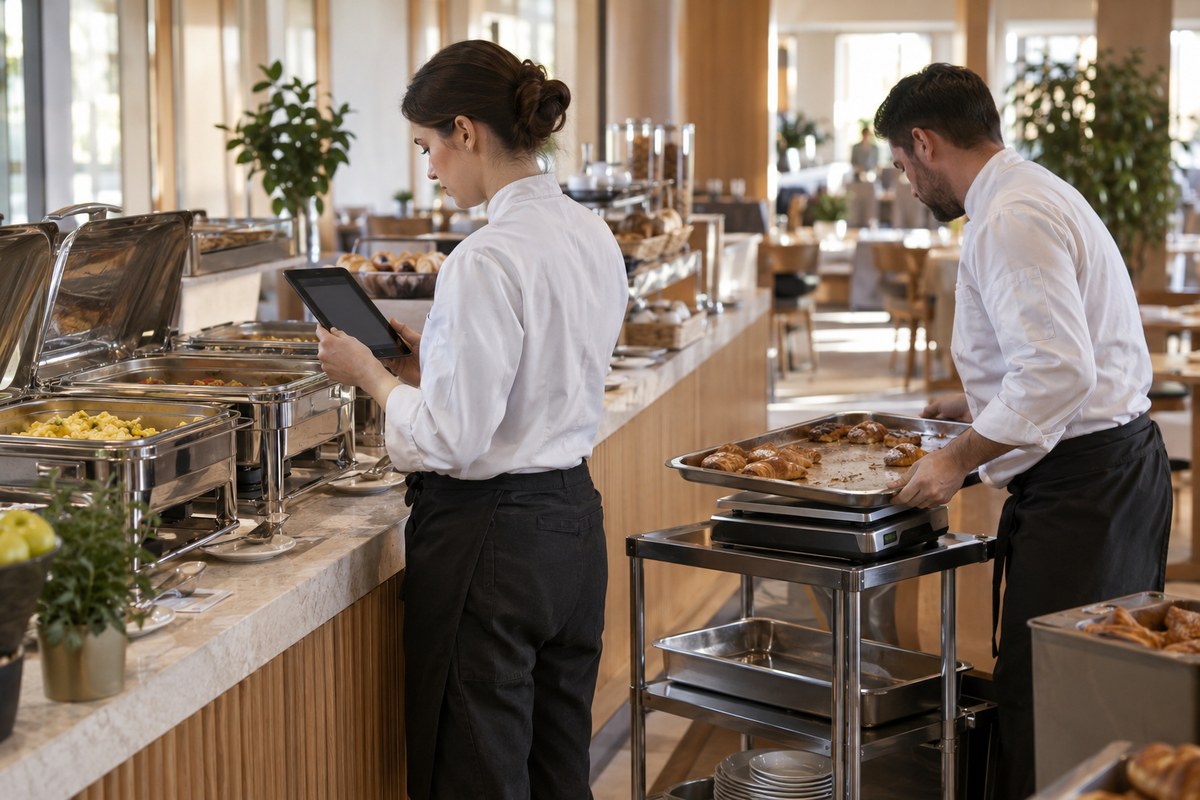
Remeasuring a hotel breakfast — what was left on the buffet
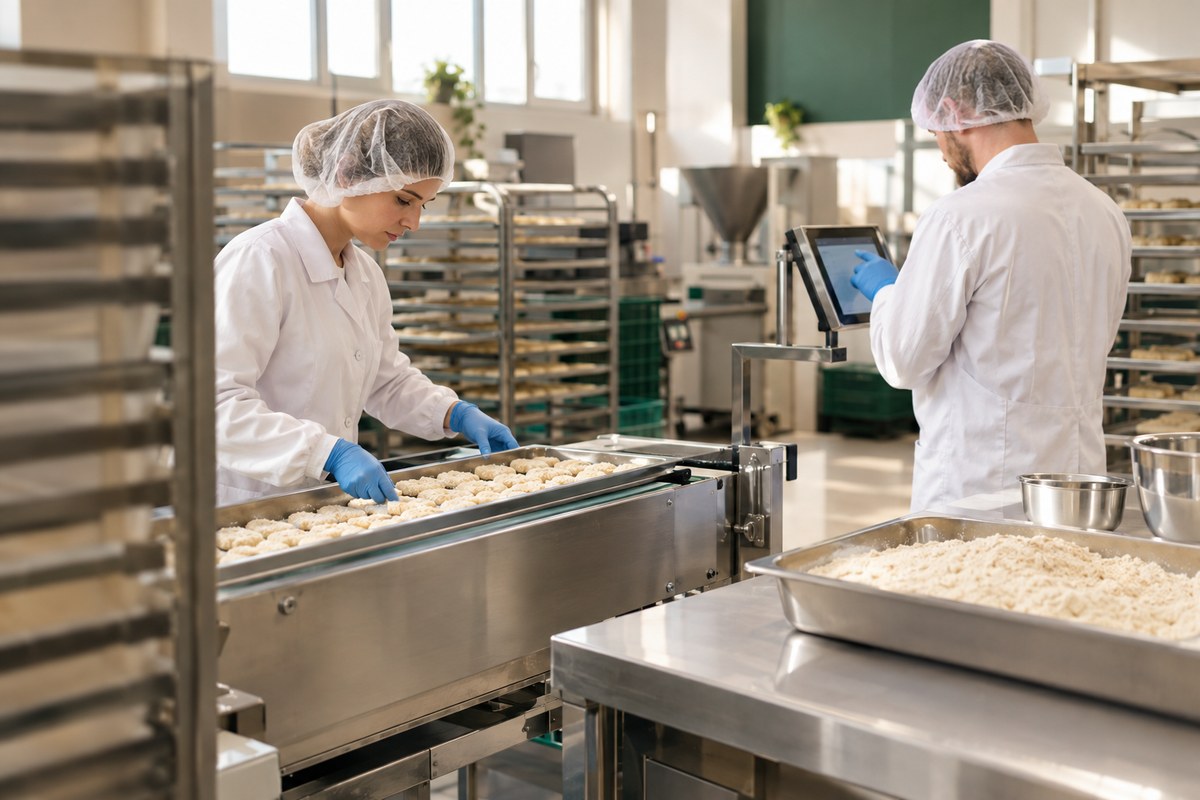
Production process — tracking yield and scrap
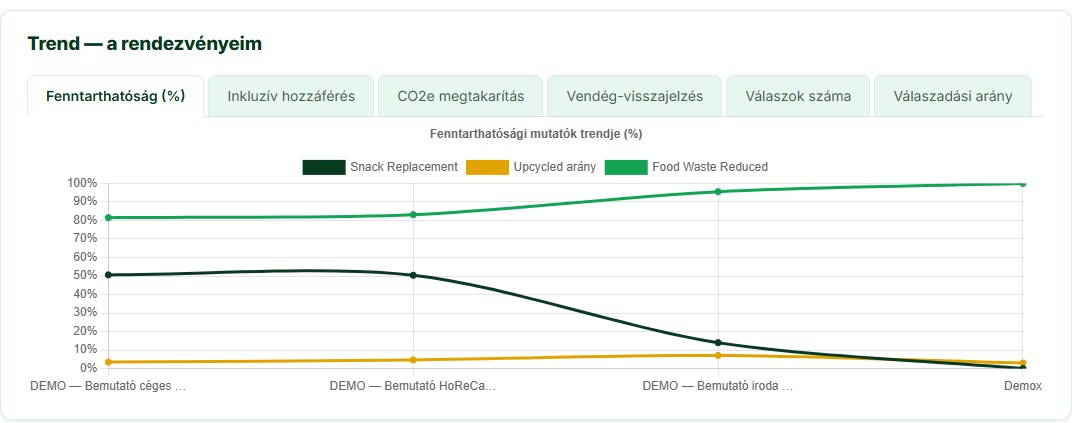
Starting point vs. actual result — Saved, Waste, Diet, and Feedback in one view.
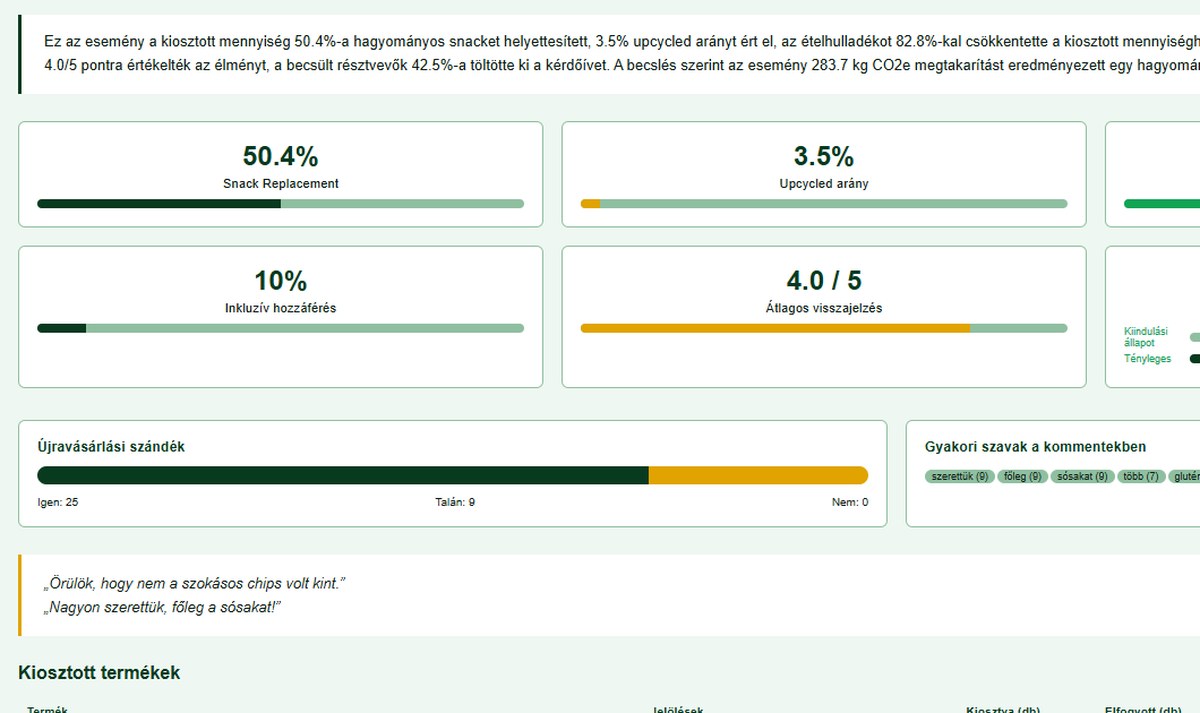
A decision-ready business summary — savings, margin, and reporting in one click.

What our partners say

We'll be sharing feedback from our pilot partners and our first measurement results here soon.

What we take off the partner's shoulders

No new administrative system needed

You don't need to build a new administrative system: we organize your existing partner data and simple Food Impact data collection in one system.

No manual aggregation

Results appear in one place, in a unified view.

Immediately usable results

The summary can be used in executive, ESG, HR, employer-branding, and marketing communication alike.

What do we measure?

Measurement areas — not process steps.

Saved

kg • ratio • verified source • products from multiple brands

Waste

distributed • leftover • waste • raw material loss • yield • effect on ordering, production and margin

Diet

free-from • vegan • other needs • a wider guest or customer base

Feedback

satisfaction • needs • QR / on-site response

Result

savings • margin • yield improvement • waste reduction • ordering or production decision • reporting — the measurement leads to a concrete decision

We respond to industry needs

The Food Impact Platform is developed based on feedback from corporate, hotel, hospitality, retail, and food-industry professionals.

Request a personalized demo

Let's see where loss arises in your own retail, corporate, hospitality, or manufacturing operation, what change is justified, and what business result can be measured back.

Food Impact, in tangible form

Food Impact can also take a tangible form

With MOKYEN's premium, mindful, and inclusive product range, a corporate gift or event offering that connects to your Food Impact goals can be put together quickly and easily.

FoodImpact doesn't only measure MOKYEN products. Verified product, venue, and program data from other brands and suppliers can also be connected to the platform.

Customizable from as few as 100 units.

View Food Impact gifts

Who are we?

The Food Impact Platform is developed by the Clean Label team: we combine food-industry, measurement, and business-analytics expertise to turn food loss into a remeasured, better business decision. Part of our food-industry and innovation background is MOKYEN by Majomkenyér — a 13-year-old, multi-award-winning Hungarian brand (recognized with, among others, the Inno d'Or award), whose gluten-free, allergen-free, and sustainably-minded product portfolio and hands-on hospitality experience form the professional foundation of the platform. Our hands-on food-industry background allows the platform not only to measure, but also to interpret operational and manufacturing interventions in a real business context.